Muswell Hill House Clearance: Recycling & Sustainability Commitment
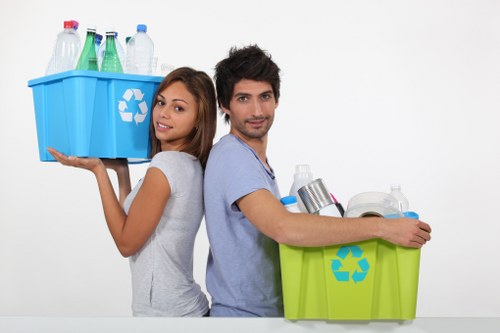 Muswell Hill House Clearance is committed to an eco-first approach to every property we clear. Our sustainable rubbish collection services focus on diverting as much material as possible away from landfill, prioritising reuse, repair and recycling in line with local borough policies. We work with householders across Muswell Hill, aligning our processes with the London boroughs' emphasis on source separation for glass, paper, food waste and garden waste.
We set an ambitious recycling percentage target to measure impact: our immediate goal is to achieve a 75% recycling rate for all collected materials within the next 24 months, with an operational aim to send over 90% of reusable items for donation or repair. This target drives daily decisions—what gets recycled, what’s repaired, and what is responsibly disposed of.
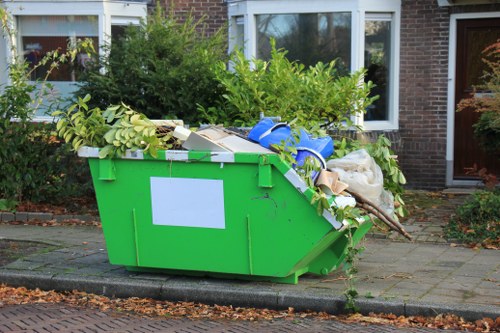 The boroughs around Muswell Hill, notably Haringey and nearby Barnet, encourage residents and services to separate dry recyclables, food and garden waste at source. We mirror that approach in our clearances, sorting on-site whenever safe and practical to maximise diversion and to speed transfer to local recycling infrastructure.
Local Transfer Stations and Waste Hubs
We use approved local transfer stations and household waste recycling centres across north London to ensure materials are handled correctly. Our routing ensures materials headed for recycling, energy recovery or specialist processing reach the most appropriate facility quickly, reducing truck miles and emissions.
Examples of local transfer points we routinely work with include:
- Edmonton EcoPark and neighbourhood recycling hubs in Enfield
- Hendon recycling facilities servicing Barnet-area collections
- Haringey transfer sites and community recycling centres serving Muswell Hill and surrounding wards
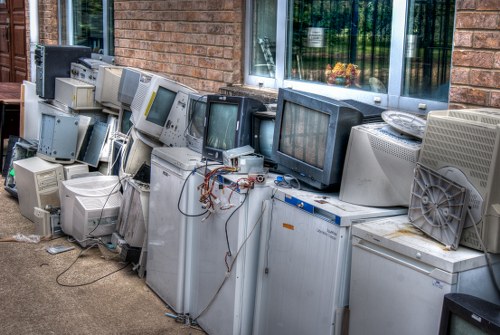
These partnerships mean glass, metals, textiles, bulky wood and electronics are separated for the correct streams rather than sent to landfill. We also log material flows to help track our recycling percentage target and to report improvements over time.
Charity Partnerships & Reuse Networks
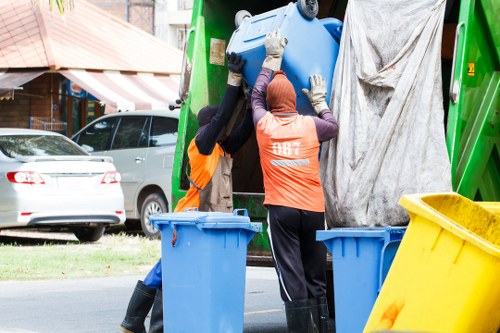 Giving items a second life is central to our sustainable clearance model. Where furniture, household goods, clothing and books are reusable, we coordinate direct donations to local and national charities. Our partners include furniture reuse organisations, clothing banks and community projects that accept household items for redistribution.
We prioritise charities and local social enterprises that collect and refurbish: this reduces waste and supports local people. For items that need minor repair, we engage with repair cafes and social enterprises that specialise in furniture restoration and appliance refurbishment, keeping more material in use and supporting a circular economy.
Our process documents what can be salvaged and creates clear pathways for items: donate, repair, recycle or responsibly dispose. This increases the portion of cleared material that achieves reuse rather than disposal.
To support transparency we publish regular summaries of tonnages diverted from landfill and the proportion sent to each destination—charity, reuse, materials recycling or special processing. We also look to work with borough waste teams when larger clearances might affect collection contracts or require special handling for hazardous items.
Hazardous materials and specialist wastes are handled separately, complying with regulations. Items like asbestos, certain paints, solvents and contaminated soils are taken to licensed facilities only, reducing community risk and environmental harm.
Operational efficiency plays a big role: by combining appointments in the same neighbourhood and optimising load planning we reduce empty running, cut carbon emissions and keep prices fair.
 Our vehicle fleet is being transitioned to low-carbon vans and electric models where routes allow. We operate a mix of electric and low-emission hybrid vans for inner-London work, and use Euro 6 diesel vehicles for longer runs while we continue electrification. These choices lower our transport carbon footprint and help meet borough low-emission expectations.
We also use smaller, agile vehicles and cargo bikes for sensitive local collections when access is restricted—this minimises noise and emissions in residential streets. Every step toward cleaner transport supports our broader sustainability goals.
Monitoring and improvement: we track fuel use, miles per job and the percentage recycled. This data helps refine scheduling, identify high-value reuse opportunities and hold ourselves accountable to our recycling percentage target.
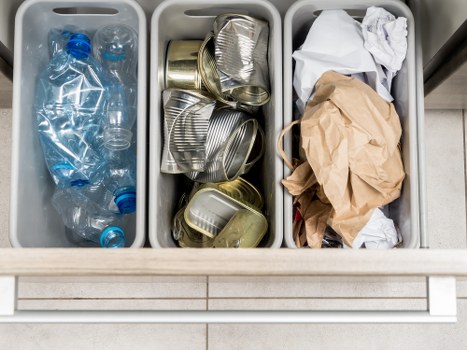 Sustainability at Muswell Hill house clearance is a continuous journey. We invest in staff training on waste separation, reuse assessment and safe handling of complex materials so that every clearance is carried out with environmental care. Our teams understand local recycling rules—from segregating food waste to ensuring electricals are treated through proper WEEE routes.
The result is a more sustainable rubbish removal and clearance service that supports local circular economy initiatives and meets the expectations of residents across Muswell Hill and neighbouring boroughs. By focusing on reuse, partnership and low-carbon transport, we aim to be the standard for eco-friendly waste disposal in the area.
Join us in reducing landfill, boosting reuse and supporting community partners—our sustainability practices mean your clearance can do more for the planet and for local people.